Without new landers or rovers, it's helicopters or bust for NASA's Mars program
By the AIdeaFlow Team
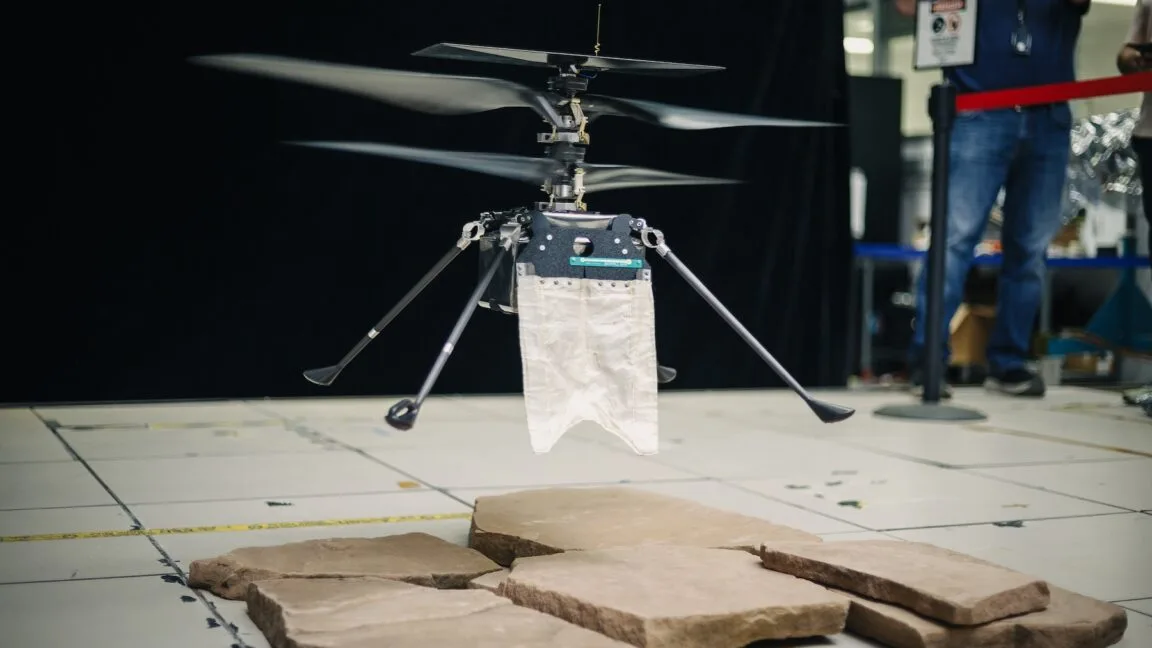
NASA's Mars strategy just took a sharp turn upward. For the first time in three decades, the agency has no new rovers or landers on the books. Instead, it's going all in on helicopters, according to Ars Technica reporting.
The shift centers on SkyFall, a mission launching as soon as late 2028 that will deploy three helicopters to explore Mars from the air. They'll piggyback on the Space Reactor-1 Freedom mission, a $2.1 billion nuclear electric propulsion testbed that's repurposing hardware from the canceled Gateway lunar station. Both projects were greenlit in the last six months, a remarkably fast pivot for NASA.
This isn't a wild gamble. Ingenuity, the experimental chopper that tagged along with the Perseverance rover in 2021, proved that powered flight works on Mars despite the thin atmosphere. It was supposed to make five flights. It flew 72 times before contact was lost earlier this year. That success opened the door to using drones as primary science platforms, not just tech demos.
The timeline is aggressive, especially for missions that didn't exist half a year ago. But the upside is real. Helicopters can cover terrain rovers can't reach, scout ahead for future missions, and gather data from cliffsides, craters, and other hard-to-access spots. They're faster, more flexible, and can investigate multiple sites in a single mission.
The tradeoff is capability. Rovers carry heavy science payloads and can dig, drill, and analyze samples on the spot. Helicopters are limited by weight and power. SkyFall will need to prove that what drones gain in mobility outweighs what they lose in lab equipment. If they succeed, we might be looking at a new era where Mars exploration happens from the sky, not the ground.
What this means for you: if you're tracking space tech or planning content around Mars missions, the narrative is shifting from slow, methodical surface exploration to faster aerial reconnaissance. For research or business planning, try this prompt with your AI assistant: "Based on NASA's shift to aerial drones for Mars, what are three emerging technology areas in autonomous flight systems that could see increased investment in the next five years? Include potential commercial applications beyond space exploration."
Ready to apply this tech at your business?
Viking Net helps teams in San Antonio and worldwide stay ahead.