I rented a car, and within hours, my driver's license was for sale
By the AIdeaFlow Team
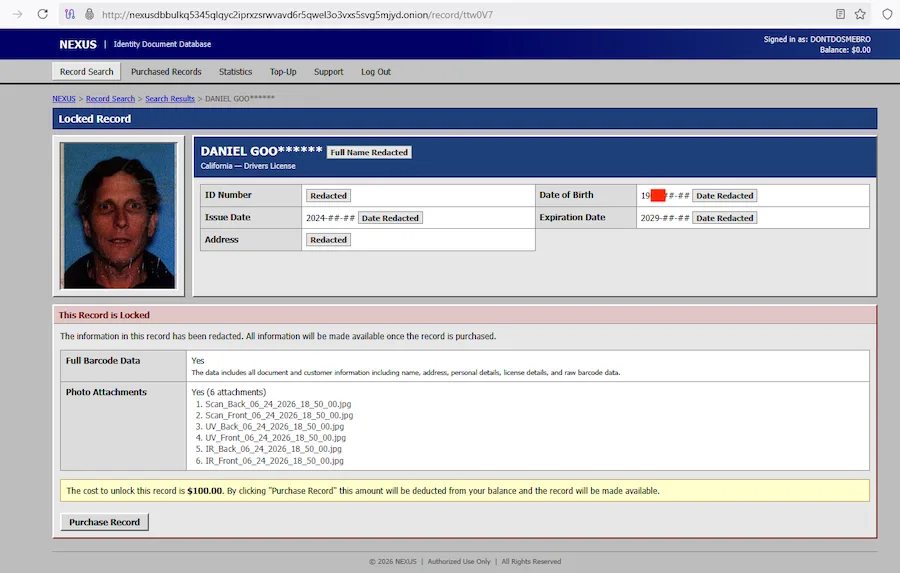
The landscape of identity theft just took a terrifying leap forward. According to an exposé by KrebsOnSecurity, a new dark web marketplace named Nexus is actively selling high-fidelity scans of driver's licenses. The scale is staggering, with over 153 million IDs reportedly available for purchase. This is not just a simple database leak. It represents a structured, commercialized service that treats personal identity as a commodity.
What makes this particularly alarming is the depth of the data being sold. The listings do not stop at standard front and back images. They include infrared and ultraviolet spectrum captures of the same documents. These additional formats are likely intended to help counterfeiters bypass advanced security features like holograms and UV-reactive inks. This level of detail suggests that the threat actors are preparing for physical forgery, not just digital fraud.
The source of this massive data dump remains a critical question. The article highlights a personal anecdote where a rented SUV led to a license scan being sold within hours. While this specific incident may be an outlier or a targeted attack, it points to a systemic vulnerability in the car rental industry. These companies collect vast amounts of sensitive data daily, often with insufficient security protocols to protect it from internal or external compromise.
The range of victims is equally disturbing. The report notes that the IDs available include those of journalist Brian Krebs, his mother, an FBI assistant director, and several security researchers. This indicates that the breach is not limited to random civilians. It suggests that high-profile individuals and those in law enforcement are being specifically targeted or are simply caught in the same wide net as everyone else.
From an AI and technology perspective, this is a wake-up call for how we handle biometric and identity data. As AI tools become better at generating realistic forgeries, the barrier to creating convincing fake IDs lowers significantly. The availability of spectral data means that even sophisticated verification systems might struggle to distinguish between a real ID and a high-quality clone. This shifts the risk from digital account takeovers to physical impersonation.
For professionals and entrepreneurs, the implications are clear. You must assume that any document you scan or upload is already compromised. Relying on traditional verification methods is no longer enough. We need to advocate for more secure, decentralized identity solutions that do not rely on static images of government-issued IDs. The era of trusting a JPEG of your license is over.
What this means for you is that you need to adopt a zero-trust approach to your personal documents. Stop sharing physical copies of your ID whenever possible. If you must verify your identity digitally, look for services that use live video verification or tokenized data rather than static image uploads. Here is a prompt you can use to audit your current digital footprint:
"Analyze my recent online activities and list every service where I have uploaded a photo of my driver's license. For each service, provide steps to request the deletion of this data and suggest alternative verification methods that do not require storing a static image of my ID."
The Nexus marketplace is a stark reminder that our identity is under constant siege. We must adapt our habits and our technology to stay ahead of these increasingly sophisticated threats.
Ready to apply this tech at your business?
Viking Net helps teams in San Antonio and worldwide stay ahead.