Three Mark Zuckerbergs, Three Surprisingly Different Men
By the AIdeaFlow Team
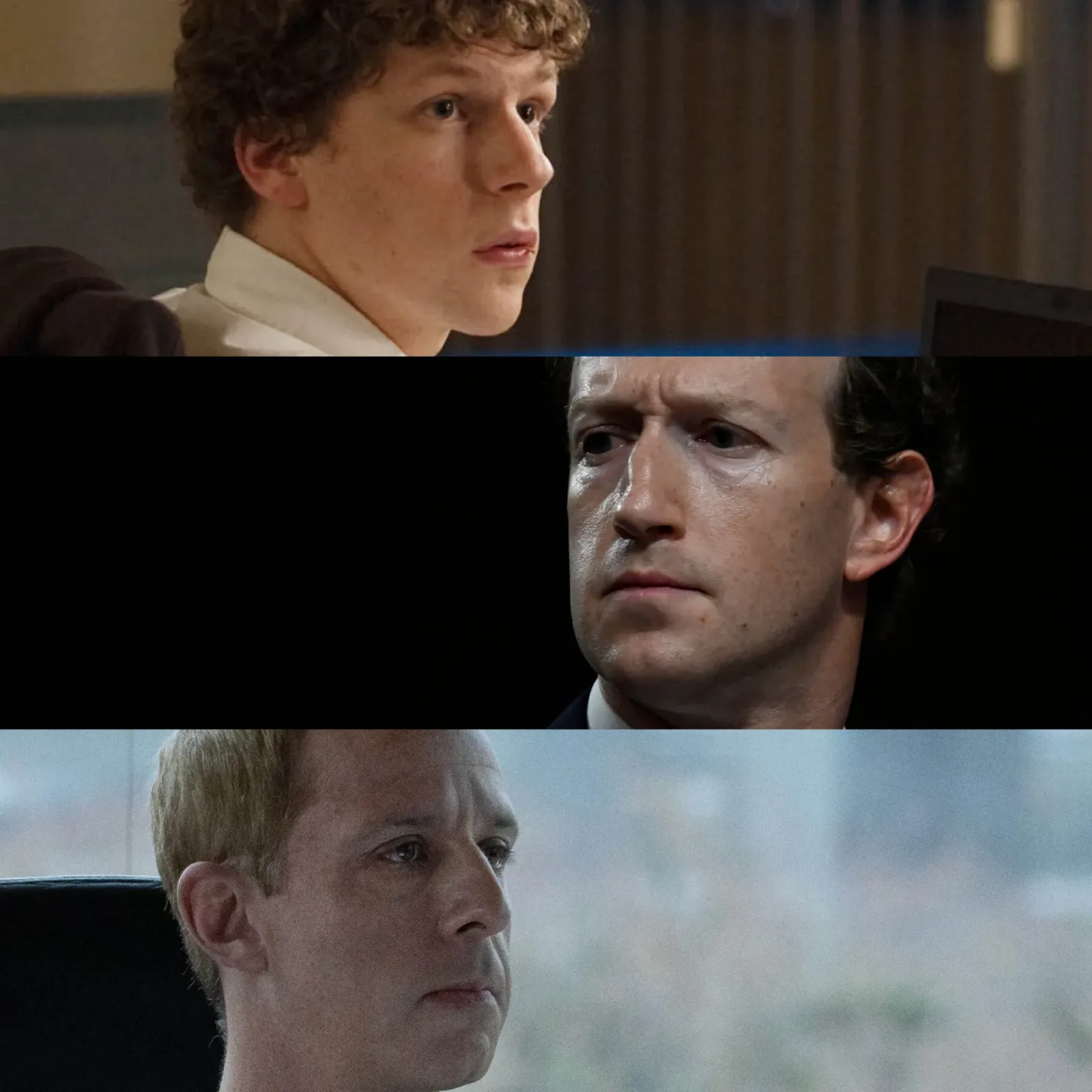
The public face of Meta has undergone a fascinating metamorphosis over the last decade. We have seen Mark Zuckerberg portrayed by Jesse Eisenberg in The Social Network, a sharp, socially awkward coder who accidentally built an empire. Now, Jeremy Strong is stepping into the role for The Social Reckoning, bringing a completely different energy to the character. These three versions of the same man highlight how our cultural understanding of tech leadership has evolved alongside the technology itself.
Eisenberg’s portrayal defined a generation’s view of Silicon Valley. It was cynical, fast-paced, and focused on the social dynamics of early networking. That film captured the zeitgeist of the 2000s, where connection was the primary metric of success. The narrative was about disruption and the raw energy of youth. It was a story about building a platform that changed how people communicated.
Strong’s interpretation, however, signals a shift in tone and substance. His background in intense, method-driven roles suggests a Zuckerberg who is more calculated and perhaps more burdened by the weight of his creation. The Social Reckoning implies a narrative of consequence and accountability. This is no longer just about building the future. It is about dealing with the fallout of that future.
The real Mark Zuckerberg has quietly transformed his own approach in ways that mirror this cultural shift. He has moved away from the avatar-heavy metaverse hype and doubled down on artificial intelligence. This is not just a product pivot. It is a fundamental rethinking of what Meta’s core value proposition is. The company is now betting its future on being an AI infrastructure provider rather than just a social network.
This transition is critical for understanding the current tech landscape. AI is becoming the new electricity. It is the underlying layer that powers everything from search to creative tools. Meta’s push into open-source models and large language models positions it as a key player in this new era. The cultural narrative is catching up to this strategic reality.
The contrast between the fictional Zuckerberg and the real one is stark. The movie characters are often defined by their social interactions or their coding prowess. The real Zuckerberg is now defined by his computational power and his ability to scale AI systems. This reflects a broader industry trend where technical depth is becoming more valuable than social engineering.
What this means for you is that the narrative around tech leaders is changing. It is no longer enough to be a visionary builder. You must also be a steward of the technology’s impact. For professionals using AI tools, this shift underscores the importance of understanding the underlying models and their limitations. You should try using an AI assistant to analyze the ethical implications of a specific AI workflow you use daily. This practice will help you stay ahead of the regulatory and cultural shifts that are coming to the industry.
Ready to apply this tech at your business?
Viking Net helps teams in San Antonio and worldwide stay ahead.