Microsoft’s new AI chip makes it less reliant on Nvidia’s GPUs
By the AIdeaFlow Team
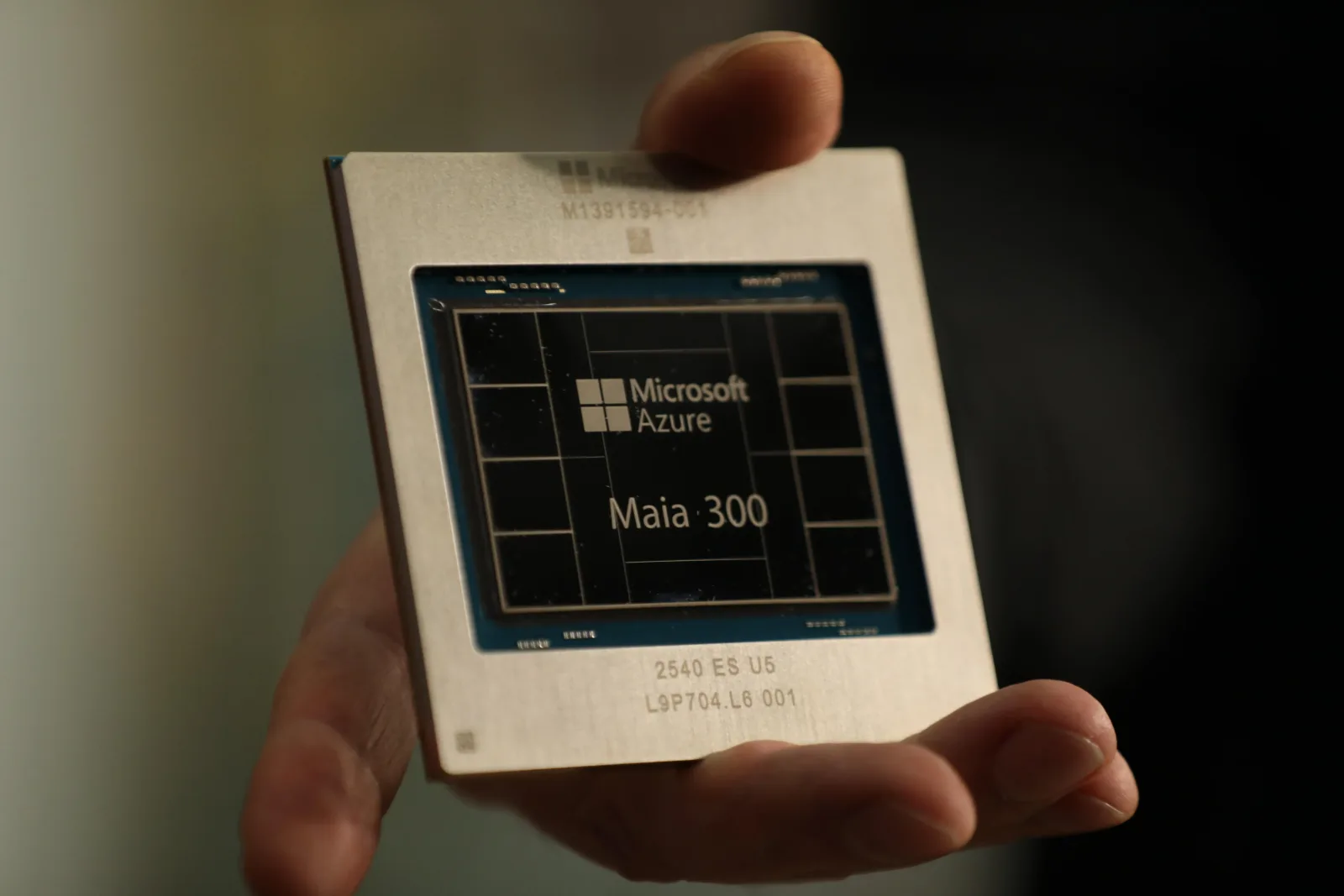
Microsoft is making a bold move to decouple its AI infrastructure from Nvidia, announcing the third-generation Maia chip designed to serve as the primary inference engine for its vast ecosystem. According to The Verge, this new silicon is not just an incremental upgrade but a strategic pivot toward self-sufficiency in the race for AI dominance. The company explicitly states that Maia 300 will handle the heavy lifting for its products and services, marking a significant departure from its previous reliance on third-party hardware.
The technical focus here is squarely on efficiency and the ability to handle complex reasoning tasks. Scott Guthrie, executive vice president of Microsoft Cloud, highlighted that the chip delivers forty percent more tokens per megawatt compared to leading GPU-based systems. This metric is crucial because inference costs are becoming the primary bottleneck for scaling AI applications. By optimizing for energy efficiency, Microsoft is directly addressing the economic sustainability of running large language models at scale.
What makes this announcement particularly interesting is the emphasis on agentic tasks. The Maia 300 is built to handle the latest reasoning models that require multi-step planning and execution. This suggests that Microsoft is preparing its infrastructure for the next wave of AI applications that go beyond simple chat to autonomous action. The chip is designed to manage the computational intensity of these agentic workflows, which demand higher throughput and lower latency than traditional generative tasks.
The rollout timeline indicates a careful, phased approach to this hardware transition. Production deployment is scheduled for 2027, giving Microsoft ample time to refine the silicon and integrate it into its Azure cloud platform. This two-year window allows for rigorous testing and optimization, ensuring that the transition does not disrupt existing services. It also provides a buffer to address any potential supply chain or compatibility issues that often arise with new custom silicon.
From an industry perspective, this move underscores the growing trend of tech giants building their own AI chips. Google, Amazon, and Meta have all followed similar paths to reduce costs and gain competitive advantages. Microsoft’s entry into this space with Maia 300 intensifies the competition with Nvidia, which has dominated the AI accelerator market. This shift could eventually lead to a more fragmented hardware landscape where cloud providers compete on proprietary efficiency rather than shared GPU architectures.
The implications for developers and enterprises are profound. As Microsoft integrates Maia 300 into Azure, customers may see reduced costs for inference-heavy workloads. This could lower the barrier to entry for businesses looking to deploy sophisticated AI agents. However, it also means that optimizing for Microsoft’s custom hardware might become a new skill requirement for AI engineers. The ecosystem is slowly moving away from a one-size-fits-all GPU model toward specialized, provider-specific optimizations.
What this means for you: If you are building AI applications that rely heavily on inference, keep an eye on Azure’s Maia 300 integration. Start experimenting with agentic workflows now to understand the computational demands. You can use this prompt to simulate an agentic task in your current AI assistant to gauge complexity: "Act as a project manager. Break down the task of launching a new feature into five distinct steps. For each step, identify the potential risks and propose a mitigation strategy. Output the result in a structured table." This helps you prepare for the multi-step reasoning capabilities that Maia 300 is designed to accelerate.
Ready to apply this tech at your business?
Viking Net helps teams in San Antonio and worldwide stay ahead.