Amazon has over 1 million robot workers. What’s next for human employees?
By the AIdeaFlow Team
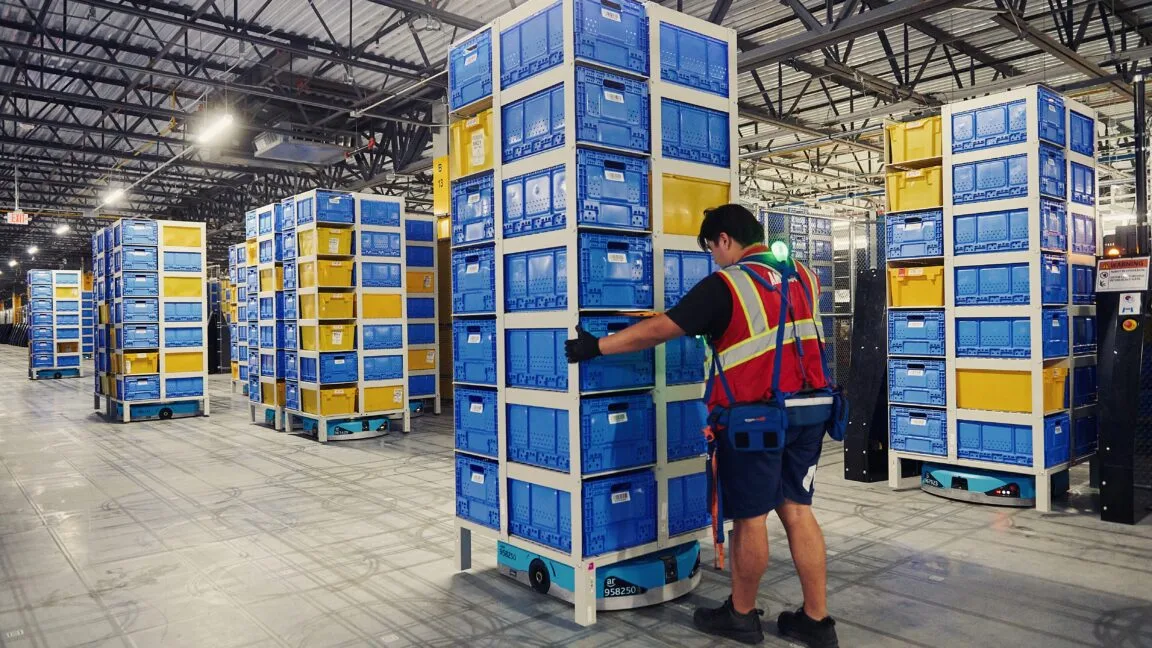
Amazon has officially crossed a major technological milestone by deploying over one million robots across its global fulfillment network. According to recent reporting, this massive fleet operates around the clock to support the company’s ambitious same-day and one-day delivery promises. The sheer scale of this automation effort is staggering, with Amazon actively building new factories to produce even more capable robotic units for the future.
Despite this heavy investment in automation, Amazon remains the second-largest corporate employer in the world. Its 2025 annual report confirms that the company still employs more than 1.5 million full-time and part-time human workers. This coexistence of massive robotic fleets and a vast human workforce challenges the common narrative that automation simply replaces human labor entirely.
Amazon executives argue that this robotic integration is fundamentally improving working conditions. They claim that by assigning the most physically demanding and injury-prone tasks to machines, the company has significantly reduced physical fatigue for its human staff. The logic is that robots handle the heavy lifting, allowing humans to focus on tasks that require dexterity and decision-making rather than brute strength.
However, independent researchers and labor advocates are raising serious concerns about the hidden costs of this shift. Brian Greenwood, a business professor at George Mason University, told Ars Technica that the nature of modern automation is different from past industrial revolutions. Unlike older machines that operated in separate areas, today’s collaborative robots work in close physical proximity to humans.
This proximity creates a new dynamic where robots can effectively dictate the pace of work. Greenwood notes that this shift changes the fundamental relationship between worker and machine. Instead of humans controlling the speed of their tasks, the algorithmic efficiency of the robots may force humans to keep up with an increasingly rapid operational tempo.
The rise of AI-driven warehouse automation is not just about efficiency; it is about surveillance and control. When robots manage the flow of goods, they also generate data on every human movement. This creates an environment where performance metrics are hyper-visible, potentially leading to increased pressure on workers to match the relentless speed of automated systems.
What this means for you: As AI tools become more integrated into physical and digital workflows, the focus shifts from replacement to augmentation. You must learn to manage the pace set by automated systems rather than fighting against it. Try using an AI assistant to audit your own daily tasks. Ask it to identify which repetitive actions could be automated and which require human judgment. This helps you maintain control over your workflow instead of letting tools dictate your speed.
The future of work is not a binary choice between humans and robots. It is a complex hybrid model where success depends on adapting to new forms of collaboration. Companies that prioritize human well-being alongside robotic efficiency will likely see better long-term results than those that simply chase speed metrics. The challenge for leaders is to design systems that augment human capability without exploiting human limits.
Ready to apply this tech at your business?
Viking Net helps teams in San Antonio and worldwide stay ahead.