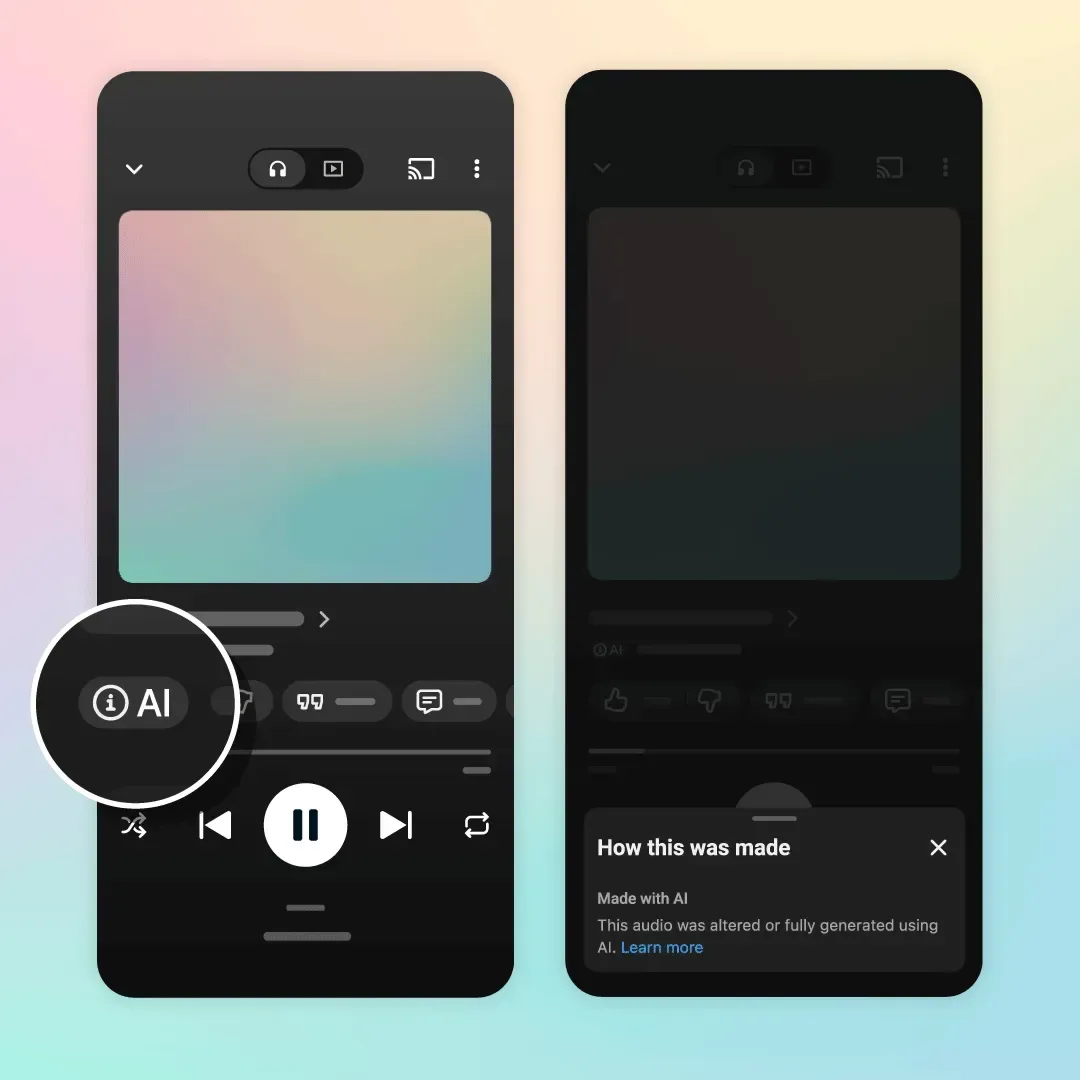
YouTube is finally drawing a hard line in the sand regarding artificial intelligence in music. According to The Verge, the platform is introducing a mandatory "Made with AI" label for tracks that are either fully generated or significantly altered using generative models. This isn't just a small update. It represents a major structural change in how digital content is classified and consumed on the world's second largest search engine.
The new policy mirrors YouTube's existing approach for video content, creating a unified standard across formats. If you use a generative model to create the composition or vocals, that track will carry the label. This clarity is crucial because the line between human creativity and AI assistance has become increasingly blurry for independent artists and major labels alike.
What makes this rollout particularly interesting is the enforcement mechanism. YouTube is not relying solely on self-reporting from music partners. The company has stated that if a creator fails to disclose AI usage, the platform will use other signals to detect and label the content automatically. This suggests a sophisticated backend system is already in place to identify AI fingerprints in audio waves.
This shift has profound implications for the music industry's trust economy. Listeners are growing wary of deepfakes and synthetic voices that mimic real artists without consent. By forcing transparency, YouTube is attempting to protect the integrity of the listening experience. It also protects artists whose likenesses might be stolen by unscrupulous bad actors using voice cloning tools.
For content creators, this means the era of hiding AI involvement is over. You can no longer claim a track is purely human if it was built on a generative foundation. This changes the marketing narrative for many producers who rely on AI tools for speed and efficiency. They must now decide whether to embrace the label as a sign of technological fluency or risk penalties for non-disclosure.
The broader tech trend here is regulatory pressure meeting platform self-policing. As governments worldwide debate AI transparency laws, tech giants are preemptively setting standards. YouTube's move is a clear signal that AI content will no longer be treated as invisible or default. It requires active identification and labeling by the uploader or the platform itself.
What this means for you If you are a content creator or marketer, you need to audit your current workflows. Are you using AI tools for background music or voiceovers? You must now disclose this to avoid being flagged by YouTube's detection systems. Try this prompt with your AI assistant to help draft compliant disclosures: "Draft a concise and professional disclosure statement for a YouTube video description that explains the use of AI-generated background music and voice synthesis, ensuring it meets standard transparency guidelines."
The future of digital media is hybrid. The key is transparency. By labeling AI content, platforms like YouTube are trying to preserve human trust in an increasingly synthetic landscape. Creators who adapt to these new norms early will build more resilient and trustworthy audiences.
Ready to apply this tech at your business?
Viking Net helps teams in San Antonio and worldwide stay ahead.