Trump posts AI-edited photo to brag about White House restoration work
By the AIdeaFlow Team
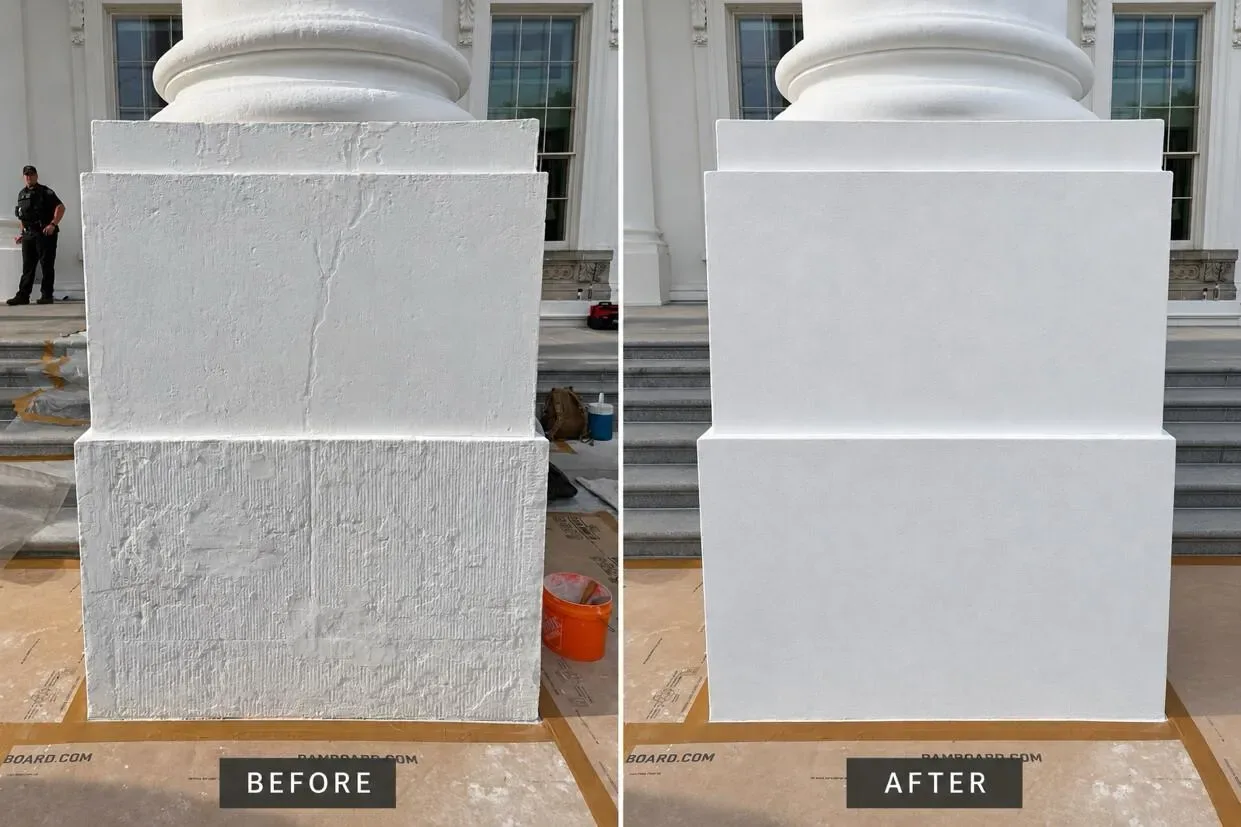
President Donald Trump recently took to Truth Social to showcase what he described as the restoration work on the White House. The post included a series of images intended to highlight the progress and aesthetic improvements made to the historic residence. However, one specific image comparing an old column to a newly restored version has drawn significant attention for reasons that go beyond simple renovation updates.
According to The Verge, the image in question appears to have been modified using artificial intelligence. Google’s AI detection tool flagged the photo as being made or edited with OpenAI technology. This kind of automated detection is becoming a standard part of digital literacy, yet it remains imperfect. The flag serves as a digital watermark of sorts, indicating that the visual content was not captured purely through a camera lens.
Users on Reddit quickly began dissecting the image for inconsistencies that the AI likely missed. One glaring issue involves the steps leading up to the column. The restored side displays an uneven number of steps that do not align with the original structure. This kind of geometric hallucination is a common artifact in generative image models, which often struggle with precise symmetry and structural logic.
Beyond the steps, the angle and detail of the before and after photos appear nearly identical. In a genuine photographic comparison, slight shifts in perspective are almost inevitable. The perfect alignment suggests that the AI did not just edit the column but potentially reconstructed the entire scene based on a single input. This level of synthetic realism can be powerful for marketing but dangerous for transparency.
The incident underscores a broader trend in political communication where digital manipulation is becoming increasingly accessible. Leaders and organizations now have the tools to create idealized versions of reality without needing a professional graphic design team. This lowers the barrier to entry for visual storytelling but raises the stakes for verification. Trust in digital media is eroding as the line between captured reality and synthetic creation blurs.
For professionals and enthusiasts, this event serves as a reminder that visual evidence is no longer inherently trustworthy. The ability to detect AI-generated content is becoming a critical skill in media analysis. It is not just about spotting obvious errors but understanding the metadata and context surrounding an image. As these tools become more sophisticated, the burden of proof shifts to the viewer to remain skeptical.
What this means for you is that you must adopt a critical eye toward all digital media, especially in high-stakes environments like politics or corporate communications. You should not assume that an image is authentic simply because it looks realistic. Instead, use available tools to verify the origin of visual content and look for structural inconsistencies that AI models often overlook.
Try this workflow with an AI assistant: Paste the text description of an image you are analyzing into your AI tool and ask it to list potential geometric or logical inconsistencies based on real-world physics. Then, use a dedicated AI detection tool to check the image file itself. Comparing the AI’s structural analysis with the detection result can help you build a more robust verification process for your own content or research.
Ready to apply this tech at your business?
Viking Net helps teams in San Antonio and worldwide stay ahead.