Eka is worth $1.45B thanks to a physical AI model that has experts raving
By the AIdeaFlow Team
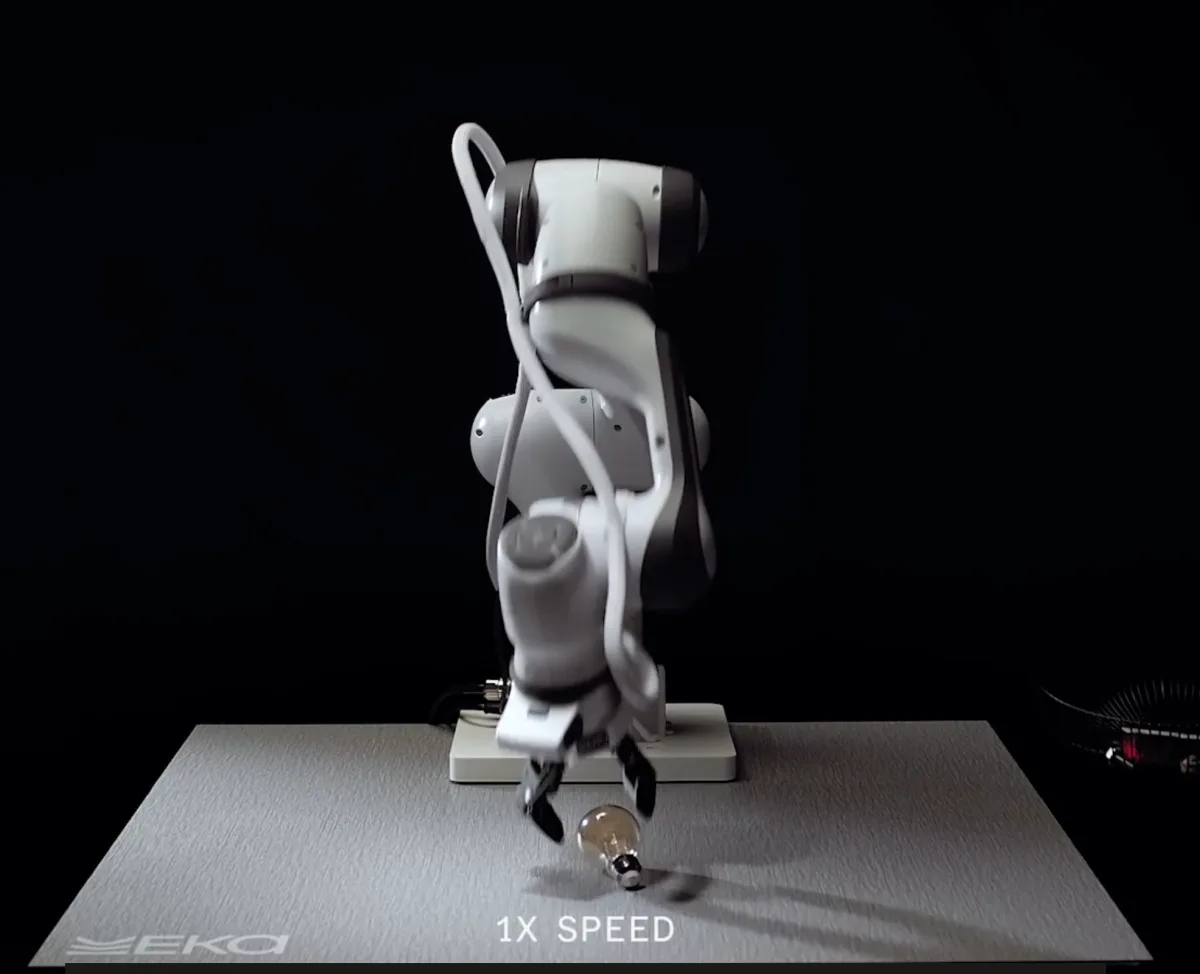
The robotics landscape just got a significant shakeup. Eka Robotics has achieved a staggering $1.45 billion valuation, according to recent reports. This is not just another funding round. It is a clear signal that the market is betting heavily on physical AI that actually works in the real world.
For years, robotic arms have struggled with the unstructured nature of real life. They are great at picking up the same box in the same spot. They are terrible at handling a pile of crumpled clothes or a jumbled drawer of tools. Eka claims to have solved this. Their system is reportedly the first to handle a wide range of objects with genuine reliability.
The key differentiator here is the smoothness of the movement. Industry experts are noting that the arm moves in a way that feels surprisingly human. It is not the jerky, pre-programmed motion of traditional industrial robots. Instead, it adapts in real time. This fluidity is what is generating the hype and driving the valuation.
This matters because it bridges the gap between digital AI and physical action. We have seen massive leaps in language models. We have seen incredible progress in computer vision. But combining those with precise physical manipulation has been the holy grail. Eka appears to have cracked the code on that integration.
The implications for logistics and manufacturing are profound. If a robot can handle unstructured environments, we no longer need expensive, rigid automation setups. We can deploy flexible systems that adapt to whatever is thrown at them. This could lower the barrier to entry for automation in small and medium businesses.
It also raises interesting questions about the future of work. This is not about replacing humans with cold machines. It is about giving machines the dexterity to assist in complex tasks. The human-like quality of the movement suggests a future where collaboration is more natural and less hazardous.
What this means for you is that the definition of AI is expanding beyond text and images. It is now about physical agency. If you are building tools for automation or logistics, you need to pay attention to how physical AI models are evolving. The ability to generalize across objects is the new competitive advantage.
Try this workflow with your AI assistant. Ask it to analyze the differences between structured and unstructured automation tasks in your industry. Then, request a list of potential applications for dexterous robotic arms in your specific workflow. This will help you identify where physical AI could add value beyond simple data processing.
Ready to apply this tech at your business?
Viking Net helps teams in San Antonio and worldwide stay ahead.