Visiting Slate’s first showroom as its $25,000 electric truck nears production
By the AIdeaFlow Team
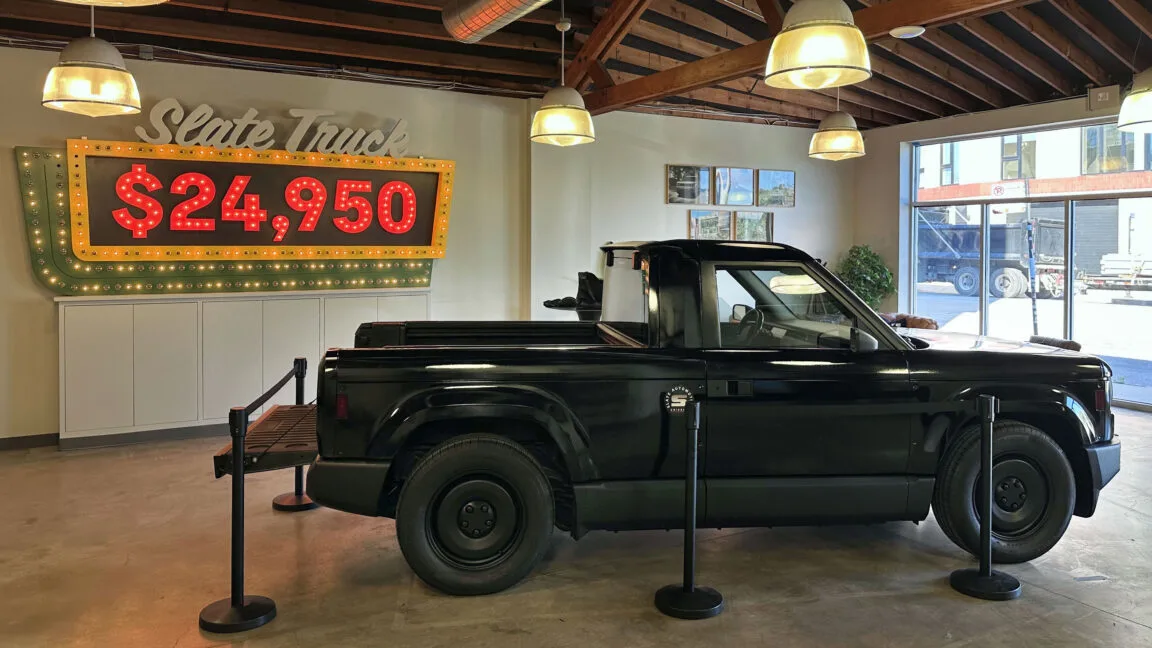
Slate Trucks is making a bold physical move in a market that has largely stayed digital. The company recently opened its first customer experience center in Chicago’s Fulton Market District, according to Ars Technica. This location, housed in a former Tesla store, serves as a tangible bridge between their online preorders and the actual product. It is staffed by former Tesla employees, which adds a layer of industry credibility to the venture.
The centerpiece of the showroom is the Slate Truck itself, a vehicle that challenges conventional EV design. Priced at $24,950, it aims to disrupt the American pickup truck obsession with a minimalist approach. The prototype features plastic panels and a bare-bones interior that prioritizes function over luxury. This design philosophy is clearly aimed at cost-conscious buyers who want utility without the premium price tag.
One of the most striking details is the inclusion of manual window cranks. While this might seem like a step backward, it aligns with the truck’s rugged, no-frills aesthetic. The experience of rolling down the window manually evokes a sense of mechanical connection that many modern drivers have lost. It is a deliberate choice that separates Slate from the tech-heavy cabins of traditional EV makers.
The showroom also allows customers to explore customization options through bright color chips. This tactile interaction helps buyers visualize their final product in a way that online configurators cannot. The ability to touch and feel the materials is crucial for a vehicle that relies heavily on its utilitarian appeal. It transforms the buying process from a digital transaction into a physical experience.
Preorders are now accessible with a modest $300 deposit. This low barrier to entry suggests Slate is targeting a broad audience beyond just early adopters. The projected range of 205 miles is competitive for a work-focused vehicle. It indicates that the company is prioritizing practical daily use over extreme off-road capabilities.
The location choice is strategic. By placing the showroom in a high-traffic urban area, Slate is exposing the brand to a diverse demographic. Former Tesla staff on hand can address common EV concerns with firsthand knowledge. This human element is vital for building trust in a new automotive brand.
What this means for you: As AI tools become more integrated into automotive design and manufacturing, expect more companies to adopt hybrid sales models. You can use an AI assistant to compare the Slate Truck’s specs against traditional EVs. Try this prompt: "Create a comparison table of the Slate Truck's $25,000 price point, 205-mile range, and manual features against the Ford F-150 Lightning and Rivian R1T, highlighting pros and cons for a small business owner."
The broader implication is that the EV market is fragmenting. Niche players like Slate are finding success by targeting specific use cases. This trend will likely continue as battery costs decrease and manufacturing becomes more flexible. Consumers will have more choices tailored to their exact needs rather than one-size-fits-all solutions.
Ready to apply this tech at your business?
Viking Net helps teams in San Antonio and worldwide stay ahead.